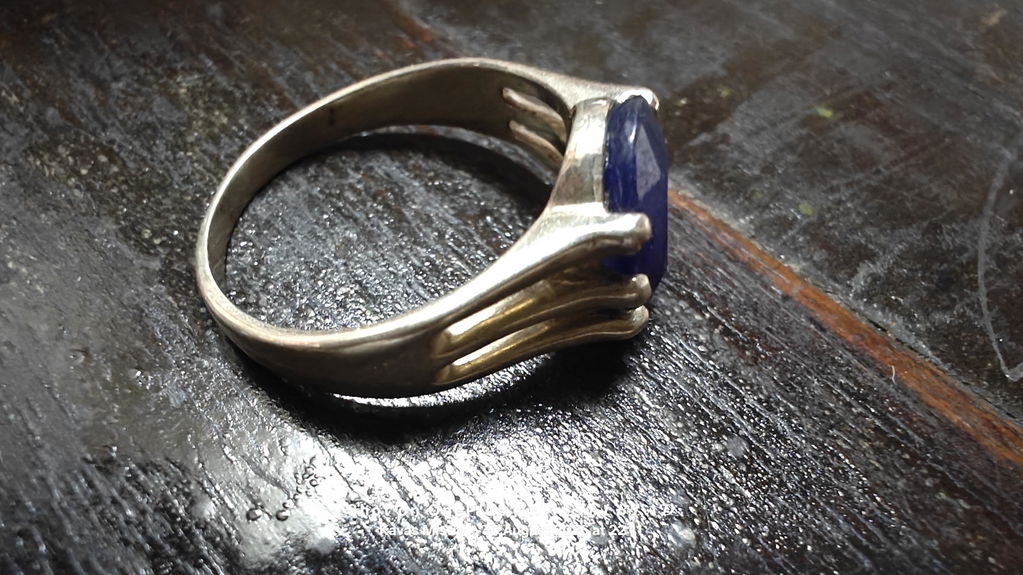
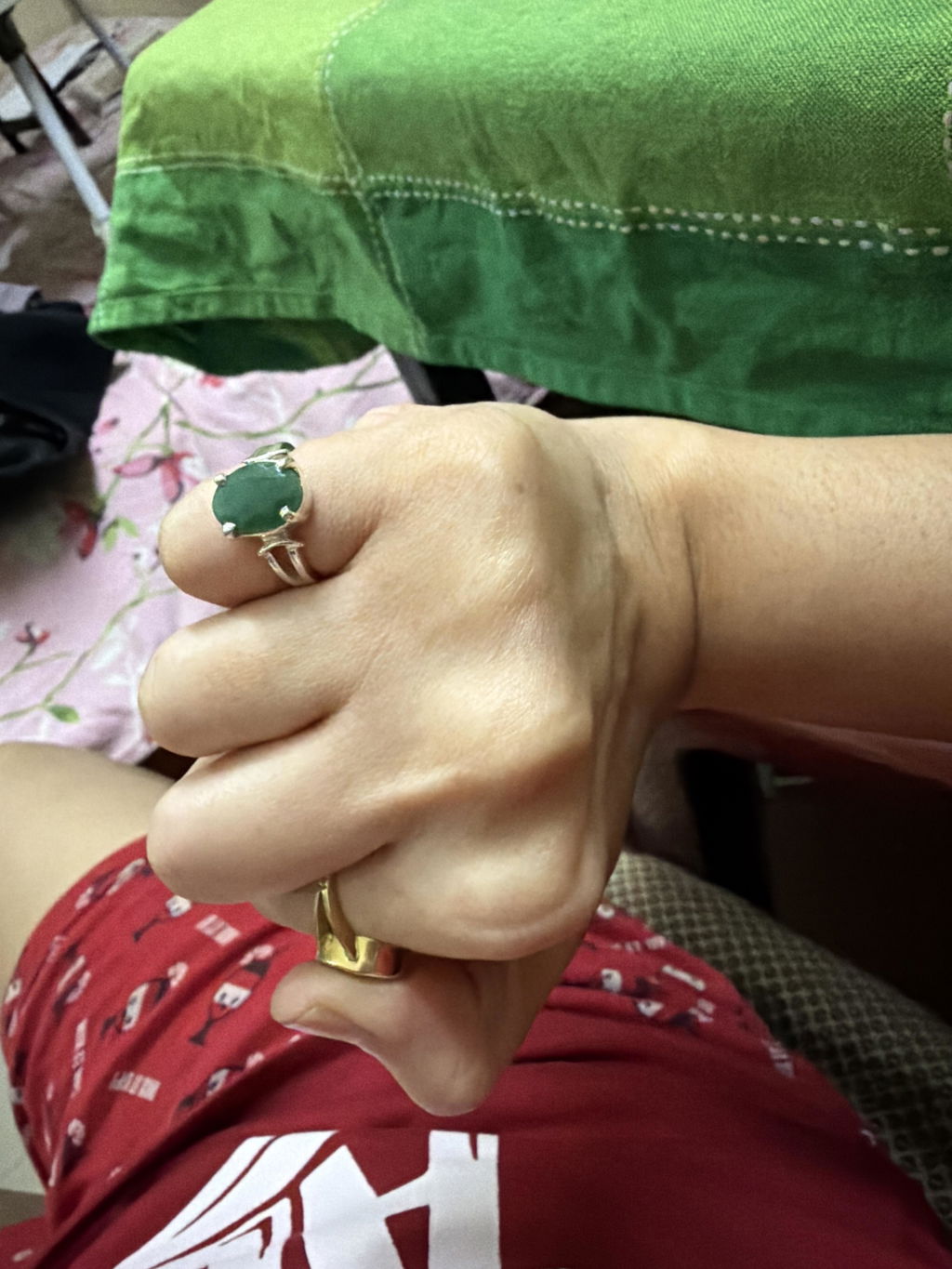
Ratti and carat are both units of weight used to measure gemstones, but they are not interchangeable, and the difference between them matters enormously when you are discussing astrological prescriptions, pricing, or comparing stones across sellers. One ratti equals approximately 0.9144 carats, a conversion that is small on paper but significant in practice, especially when a Vedic astrologer prescribes a minimum weight for a stone like Pukhraj (Yellow Sapphire, governed by Guru, the planet Jupiter) or Neelam (Blue Sapphire, ruled by Shani, the planet Saturn).
This article explains the ratti vs carat difference in plain terms, traces where each unit comes from, explains why astrologers in India still prefer ratti, shows you how to convert between the two without error, and tells you exactly what weight range to look for when buying a gemstone for astrological purposes. By the end, you will know precisely how to read a weight specification on a lab certificate and never be misled by a seller quoting weights in one unit to obscure a shortfall in another.
Ratti vs Carat Explained: The Core Difference Every Buyer Needs
Ratti and carat are distinct units of weight, not different names for the same measurement. One ratti equals 0.9144 grams divided by the density of the stone, while one carat equals exactly 0.2 grams by the international metric standard adopted by the gemological community. In practical terms, one ratti is equivalent to approximately 0.9144 carats, meaning a stone sold as 5 ratti weighs roughly 4.57 carats on an international certificate.
This gap, small as it sounds, compounds quickly. A buyer who confuses the two and assumes 5 ratti equals 5 carats is receiving a stone that is nearly half a carat lighter than expected. When a Vedic astrologer prescribes "minimum 5 ratti" for a gemstone, that prescription is typically grounded in classical texts like the Brihat Parashara Hora Shastra and the Ratnapariksha, which use ratti as their reference unit. Receiving a 5-carat stone when 5 ratti was prescribed means the stone actually exceeds the prescription; receiving a 4-carat stone when 5 ratti was asked for means the stone falls short.
Why the Word "Ratti" Is Still in Daily Use Across India
The word ratti comes from the dried seed of the Abrus precatorius plant, commonly known as the rati or gunja seed. For centuries across the Indian subcontinent, these small seeds were used as natural weights because of their remarkably consistent mass. Traders in Jaipur, Hyderabad, and Varanasi relied on the rati seed as a counterweight on traditional beam scales long before international metric standards existed. The consistency of the seed gave it credibility, and the word became embedded in the language of the gemstone trade.
Today, ratti continues to be the preferred unit of communication between astrologers and their clients across India, particularly for stones prescribed for Vedic astrological purposes. When a Jyotishi prescribes a Manik (Ruby, governed by Surya, the Sun), they almost always specify the weight in ratti, not carats. This is not a regional quirk but a continuation of a centuries-old professional vocabulary that is still entirely functional.
The International Carat and How It Became the Global Standard
The metric carat, standardised at exactly 0.2 grams, was adopted internationally in 1907 after a decade of lobbying by gemological institutions in Europe. Before that, different countries used carat weights that varied slightly from one another, causing confusion in cross-border gem trade. The standardised carat was then adopted by the GIA (Gemological Institute of America) and later by bodies such as the IGI (International Gemological Institute) as the official weight unit for all laboratory certificates and trade documentation worldwide.
Every lab report you receive in India today, whether from GIA, IGI, or GRS (Gem Research Swisslab), states weight in metric carats. This is why understanding the ratti to carat conversion is non-negotiable for any buyer who receives an astrological prescription in ratti and then needs to verify a stone's weight against its lab certificate.
The Exact Ratti to Carat Conversion Formula (With Examples)
The standard conversion used in the Indian gem trade is that 1 ratti equals 0.9144 carats. This figure is derived from the original standardised weight of the rati seed, which was codified during British colonial measurement surveys at approximately 0.1829 grams per seed, making 1 ratti equal to 0.1829 grams. Since 1 carat equals 0.2 grams, the ratio works out to 0.9144.
The traditional guidance is to always convert your astrologer's ratti prescription into carats before verifying a lab certificate. This single habit eliminates the most common source of weight confusion in the gemstone buying process.
The Conversion Table Every Buyer Should Save
Quick Answer
1 ratti = 0.9144 carats; multiply ratti by 0.9144 to get carats
2 ratti
1.83 carats
3 ratti
2.74 carats
4 ratti
3.66 carats
5 ratti
4.57 carats
6 ratti
5.49 carats
7 ratti
6.40 carats
8 ratti
7.31 carats
9 ratti
8.23 carats
10 ratti
9.14 carats
Converting Carats Back to Ratti
To convert in the other direction, divide the carat weight by 0.9144. A stone certified at 3.5 carats equals approximately 3.83 ratti. This reverse calculation is useful when a seller quotes a stone's weight in carats and you need to check it against a ratti-based prescription.
At Myra Gems, our gemologists encounter this question almost daily from customers who have visited an astrologer and received a prescription in ratti but are reading a lab certificate that states only carats. The solution is always the same: convert first, then evaluate. A stone that reads 4.6 carats on its IGI certificate is comfortably meeting a 5-ratti prescription, not falling short of it.
Shop Certified Natural Gemstone Rings at Myra Gems
Every stone in our collection is lab-certified and weight-verified. We clearly state carat weight on all product listings so you can cross-check against your astrologer's ratti prescription with confidence.
Browse certified gemstone rings
Why Vedic Astrology Uses Ratti, Not Carats, for Gemstone Prescriptions
According to Vedic astrology, the minimum weight of a gemstone prescribed for planetary influence is not an arbitrary number. Classical texts, including the Ratnapariksha, a treatise on gemstone quality and selection attributed to ancient Indian scholars, specify weight thresholds in ratti as the baseline below which a stone is considered too small to carry meaningful astrological effect. The reasoning, as understood within the tradition, is that planetary energy is believed to transmit through the physical mass of the stone, and a stone below the prescribed weight is considered ineffective regardless of its quality.
The traditional guidance is to follow the astrologer's ratti prescription precisely and not substitute a lighter stone even if it is of higher clarity or colour. A 3-ratti natural, unheated Neelam from Ceylon sourced through a certified channel is traditionally considered more astrologically potent than a larger but treated stone of the same species, but it would still be considered insufficient if the prescription called for 5 ratti.
How Astrologers Typically Determine the Minimum Ratti for Each Stone
Most Vedic astrologers follow a body-weight-based formula as a starting point, prescribing roughly 1 ratti per 10 kilograms of the wearer's body weight. This is a general guideline, not a universal rule, and qualified astrologers adjust for the specific planetary period (mahadasha or antardasha), the strength of the relevant house in the birth chart, and the individual's constitution as understood in Jyotisha. A customer approaching Myra Gems for a Blue Sapphire (Neelam) during Shani's mahadasha, for instance, will often have been prescribed between 5 and 7 ratti by their astrologer, which corresponds to 4.57 to 6.40 carats on a GRS or IGI lab report.
Which Gemstones Have the Most Critical Ratti Thresholds in Vedic Tradition
The five gemstones most frequently prescribed with specific ratti minimums in Vedic astrology are Neelam (Blue Sapphire, Shani), Pukhraj (Yellow Sapphire, Guru), Panna (Emerald, Budh), Manik (Ruby, Surya), and Moonga (Red Coral, Mangal). Of these, Neelam and Pukhraj have the most rigorous weight requirements in classical texts, as both govern powerful planets with strong karmic associations in Jyotisha. Astrologers rarely prescribe these stones below 3 ratti, and prescriptions of 5 to 7 ratti are common for adults of average body weight.
How to Read a Lab Certificate for Ratti vs Carat Weight
Every gemstone laboratory in the world, including GIA, IGI, and GRS, states weight in metric carats on its certificates. There is no ratti field on any internationally issued lab report. This means the buyer's job is to perform the conversion and verify that the certified carat weight meets or exceeds their astrologer's ratti prescription.
Gemologists recommend checking three things on a lab certificate before confirming a purchase: the carat weight relative to your ratti prescription, whether the stone is described as "natural" or "natural, unheated" (relevant for stones like Neelam and Manik where heat treatment can affect astrological acceptance), and whether the certificate is from a recognised body such as GIA, IGI, or GRS rather than an unknown in-house laboratory.
Key Weight Terminology on a Lab Certificate
The weight field on a GIA or IGI certificate will read in decimal carats, for example "4.57 ct." Some certificates also state the weight range for the species, which helps confirm the stone is not significantly under-density relative to its size (a useful fraud indicator). The specific gravity of a Blue Sapphire (corundum), for instance, is 3.99 to 4.00. A stone that appears large for its carat weight may have unusual inclusions or may not be what it is represented as.
A natural, untreated Blue Sapphire can be identified by its characteristic silk inclusions (fine rutile needles), natural growth zoning visible under magnification, and an absence of the flux-healed fractures that characterise heated stones. These internal features are noted by gemologists when examining stones under a loupe and are reflected in a full-disclosure certificate.
Red Flags in Weight Representation That Indicate a Misleading Seller
The following practices should make any buyer cautious. First, a seller who quotes only in ratti and refuses to confirm the corresponding carat weight on the certificate may be obscuring a shortfall. Second, a certificate from a laboratory the buyer cannot independently verify online deserves scrutiny. Third, a stone quoted at a strikingly round ratti number, say exactly 5 ratti or exactly 7 ratti, deserves verification, as natural stones rarely fall on perfectly round ratti measurements; when they do, it may mean the seller is estimating rather than weighing.
If you are uncertain how to read a lab report, Myra Gems' gemology team offers a guided review. You can also use the expert consultation resource to cross-check your prescription and certificate before purchase.
Get gemstone guidance from our in-house experts
Ratti vs Carat in Pricing: How Weight Units Affect What You Pay
Gemstone pricing in India operates on a per-carat basis at the wholesale and retail level, following international trade norms. However, when gemstones are marketed to astrological buyers, sellers sometimes switch to per-ratti pricing to make the stone appear less expensive. Since 1 ratti is slightly less than 1 carat, a stone priced at Rs 5,000 per ratti sounds similar to one priced at Rs 5,000 per carat, but the actual cost per gram of stone is meaningfully different.
The most important factor when buying any natural gemstone is to ask for the price per carat and then convert it to understand the full cost. Never compare two stones using one seller's ratti pricing against another seller's carat pricing without converting both to a common unit first.
How to Compare Prices Across Sellers Using a Common Unit
The following approach prevents cross-seller confusion. Take the total price of each stone and divide it by the carat weight stated on the lab certificate. This gives you the price per carat. Then compare that figure across sellers. A stone priced at Rs 22,000 with a certified weight of 4.57 carats has a price per carat of approximately Rs 4,814. A stone from another seller priced at Rs 20,000 with a certified weight of 4 carats has a price per carat of Rs 5,000. The first stone is cheaper per carat despite having a higher sticker price.
Price Premiums Based on Weight Milestones
In the international gem trade and in Jaipur's wholesale markets, certain carat weights command significant price premiums because fine-quality stones of that size are rare. For Ruby (Manik) and Blue Sapphire (Neelam) especially, stones crossing the 2-carat (approximately 2.19 ratti) and 5-carat (approximately 5.47 ratti) thresholds from origins like Burma and Ceylon tend to be priced at a steep premium per carat compared to stones just below those milestones. This is a function of supply scarcity rather than any astrological consideration, but buyers who are close to an astrological prescription threshold should be aware that slightly exceeding the weight can sometimes trigger a significant price jump.
The Gem and Jewellery Export Promotion Council (GJEPC) data on Indian gemstone trade consistently highlights this tiered pricing structure across categories, and buyers in major Indian cities increasingly consult this information before making significant purchases.
Your Trusted Source for Lab-Certified Gemstones
At Myra Gems, we have been sourcing and certifying natural gemstones for over 30 years, guiding more than 30,000 customers through the process of finding the right stone. Every piece is accompanied by a certificate from a recognised laboratory, and our listings state carat weight clearly alongside the ratti equivalent.
Explore the full collection at Myra Gems
Common Ratti vs Carat Mistakes Indian Buyers Make (And How to Avoid Them)
The single most common mistake is treating ratti and carat as synonymous and not converting before purchase. The second most common mistake is relying on a seller's verbal ratti claim without verifying it against the lab certificate's carat weight. Both errors are entirely avoidable with the simple conversion habit described earlier in this article.
A third mistake, one that At Myra Gems our gemologists see regularly, involves buyers who receive a prescription for a specific ratti weight but then purchase a stone close to that weight, not meeting or exceeding it, because a seller has rounded up the ratti figure. For example, a 4-carat stone is 4.37 ratti, which a seller might describe as "approximately 4.5 ratti." The buyer hears "approximately 4.5" and assumes it meets a 5-ratti prescription. It does not.
The Ratti Rounding Problem in the Indian Gem Trade
Rounding is endemic in the informal gem trade, and buyers relying on ratti descriptions without certificate verification are especially exposed. Legitimate sellers will always provide the exact carat weight as it appears on the laboratory report. Any rounding to the nearest half-ratti or full ratti should be treated as an approximation, not a verified weight.
What to Do If Your Astrologer's Prescription Uses a Non-Standard Ratti Definition
Occasionally, buyers encounter astrologers who use a slightly different ratti value, typically 0.182 grams or 0.121 grams per ratti, derived from regional traditions or older manuscripts. If your astrologer uses a non-standard ratti, ask them to clarify the gram equivalent so you can convert accurately to carats. Most modern Vedic astrologers across India use the standard 0.1829-gram ratti that corresponds to the 0.9144-carat conversion, but the variation exists and is worth confirming.
What to Know Before Buying by Ratti or Carat: Advice from Myra Gems' Gemologists
Over more than three decades of sourcing stones from Jaipur, Sri Lanka, Burma, and Mozambique, our gemology team has developed a set of practical insights that go beyond the standard conversion formula. The following tips reflect observations made from handling thousands of certified natural stones and guiding buyers through the ratti vs carat question across every gemstone category.
Tip one: always ask for the weight in both ratti and carats when purchasing from any seller. A trustworthy seller will confirm both without hesitation, because they know the certificate states carats and can convert for you on the spot. A seller who deflects or gives only a verbal ratti estimate without certificate support deserves scrutiny.
Tip two: for stones used in astrological jewellery, prioritise meeting the minimum ratti prescription before optimising for colour or cut. A stone that meets the prescribed weight in a natural, certified form is the priority. In our experience, buyers who compromise on weight to afford a finer-looking stone often end up returning within a year for a replacement that meets the original prescription.
Tip three: refractive index and specific gravity can help verify that a stone's size-to-weight relationship is appropriate for its species. A Yellow Sapphire (Pukhraj) has a refractive index of 1.762 to 1.770 and a Mohs hardness of 9. A stone that looks large but weighs unusually light for a supposedly sapphire piece deserves gemological scrutiny, as glass imitations and synthetic corundum can look convincing to the untrained eye.
Tip four: when comparing stones across sellers in Jaipur's wholesale markets or on online platforms, always request a GIA, IGI, or GRS certificate and verify the certificate number on the issuing laboratory's website. Replicated or forged certificates exist in the unorganised segment of the trade. Verification takes under two minutes and protects a significant investment.
Tip five: for high-value stones, the difference between buying a 4.57-carat (5-ratti) and a 4.00-carat (4.37-ratti) stone can amount to tens of thousands of rupees in price difference and, according to traditional astrological guidance, a meaningful difference in efficacy. Do not let a seller blur the distinction in conversation.
Tip six: natural stones will rarely land on perfectly round carat weights. A stone certified at exactly 5.00 carats should not automatically raise suspicion, but a seller who consistently quotes stones at round ratti figures (5 ratti, 6 ratti, 7 ratti) without certificate support for each claim is working from estimates, not measurements.
Frequently Asked Questions About Ratti and Carat in Gemstones
Q: What is the difference between ratti and carat in gemstones? A: Ratti and carat are both units of weight, but they are not equal. One ratti equals approximately 0.9144 carats. Ratti is a traditional Indian unit derived from the Abrus precatorius seed and is commonly used by Vedic astrologers when prescribing gemstone weight. Carat is the internationally standardised metric unit (1 carat = 0.2 grams) used on all laboratory certificates worldwide, including those from GIA, IGI, and GRS. The two units cannot be used interchangeably without conversion.
Q: How do I convert ratti to carats when checking a lab certificate? A: Multiply the ratti figure by 0.9144 to get the carat equivalent. So if your astrologer prescribed 5 ratti, the minimum carat weight you need on the lab certificate is 4.57 carats (5 x 0.9144). If the certificate shows 4.6 or more carats, the stone meets the prescription. If it shows 4 carats, it falls short by approximately 0.57 carats, which is close to 0.6 ratti below the prescribed minimum.
Q: Why do Vedic astrologers still use ratti instead of carats? A: Vedic astrologers use ratti because classical astrological texts, including the Ratnapariksha and Brihat Parashara Hora Shastra, specify gemstone weights in ratti. These texts form the foundation of traditional Jyotisha practice, and astrologers trained in this tradition continue to prescribe in the unit their source texts use. Ratti is also the unit that jewellers and gemstone dealers across India have historically communicated in, making it practical for the astrological consultation context.
Q: Will a gemstone weighing exactly my prescribed ratti amount work astrologically, or should it be slightly more? A: The traditional guidance is to meet or slightly exceed the prescribed ratti weight rather than to aim for the exact figure. Gemstones are cut to optimise shape and clarity, not to land on a specific weight, so a stone that is 0.2 to 0.5 ratti above the prescription is considered fully acceptable. A stone that falls even 0.25 ratti below the minimum may not satisfy the prescription, according to classical Vedic guidelines. Ask your astrologer whether the prescription is a strict minimum or a preferred range.
Q: Does a higher ratti or carat weight mean a gemstone is more powerful astrologically? A: According to Vedic astrology, meeting the minimum prescribed weight is what matters, not maximising weight above the threshold. Once a stone meets the astrological prescription, additional weight does not amplify the planetary effect in most classical interpretations. However, for larger individuals, astrologers may prescribe proportionally higher weights based on body mass. Beyond the prescription, factors such as origin, clarity, and the absence of treatment are considered more significant than extra weight.
Q: Can I buy a gemstone in carats from an online store and convert it to check my ratti prescription? A: Yes, and this is exactly the recommended approach. When buying online, always look for the carat weight on the product listing or lab certificate, then divide by 0.9144 to get the ratti equivalent. At Myra Gems, our product listings include carat weight as stated on the accompanying lab certificate, making this verification straightforward. If you are unsure, our gemology team can help you confirm whether a specific stone meets your prescription.
Q: Is it true that some sellers artificially inflate ratti claims to justify higher prices? A: Yes, this does happen in the unorganised segment of the trade. A seller who describes a stone as "5 ratti" verbally without providing a lab certificate to verify the carat weight may be rounding up or estimating. The only reliable way to verify weight is through a certificate from a recognised laboratory such as GIA, IGI, or GRS, where the weight in carats is stated to two decimal places as a measured fact. Always request and verify the certificate, and cross-check the certificate number on the laboratory's website.
Q: What is the ratti equivalent of the most common carat weights I will see online? A: Here are the most useful conversions: 1 carat equals 1.09 ratti; 2 carats equal 2.19 ratti; 3 carats equal 3.28 ratti; 4 carats equal 4.37 ratti; 5 carats equal 5.47 ratti. To calculate any carat weight, divide by 0.9144. For quick reference, a stone just above 4.5 carats on a certificate is comfortably meeting a 5-ratti prescription.
Q: Does Myra Gems state both ratti and carat weight on its products? A: Myra Gems states the certified carat weight on all product listings, derived directly from the accompanying lab certificate. Our customer service and gemology team are available to confirm the ratti equivalent for any specific stone, and our gemstone guidance page offers a consultation process that includes weight verification relative to astrological prescriptions. We do not sell stones without a recognised laboratory certificate.
Q: Is ratti used only for astrological gemstones or for all types of gemstone jewellery in India? A: Ratti is used most commonly in the context of astrological gemstone buying, where classical Vedic prescriptions specify weight in this unit. For fashion jewellery, gifts, and investment-grade coloured stones sold through modern retail, carat is the standard across India, consistent with international trade practice. In Jaipur's wholesale markets, traders often use both units interchangeably depending on whether they are serving astrological buyers or jewellery manufacturers.
Understanding Ratti vs Carat: A Summary for the Confident Buyer
The ratti vs carat question is one that trips up even experienced jewellery buyers in India, not because the conversion is complicated, but because the trade routinely switches between units without warning. Keeping the formula simple, one ratti equals 0.9144 carats, and applying it every time you receive a prescription or evaluate a stone, removes nearly all the confusion. The most important habit is to verify any ratti claim against the carat weight on a lab certificate from GIA, IGI, or GRS before committing to a purchase.
Myra Gems has been helping Indian buyers navigate exactly these kinds of decisions since 2008, drawing on more than 30 years of sourcing experience and a commitment to certified, natural stones. Every stone we offer is accompanied by documentation that states the exact carat weight, and our team is equipped to translate that weight into ratti for any astrological buyer who needs it.
The information in this article is for educational purposes. For personalised gemstone guidance aligned with your birth chart, consult a qualified Vedic astrologer before wearing any stone.
Whether you are buying a Pukhraj for Jupiter's blessings, a Neelam for Shani's period, or exploring the full range of certified natural gemstones, understanding how to read and convert weight measurements keeps you in control of every purchase.
Discover natural certified gemstone rings at Myra Gems