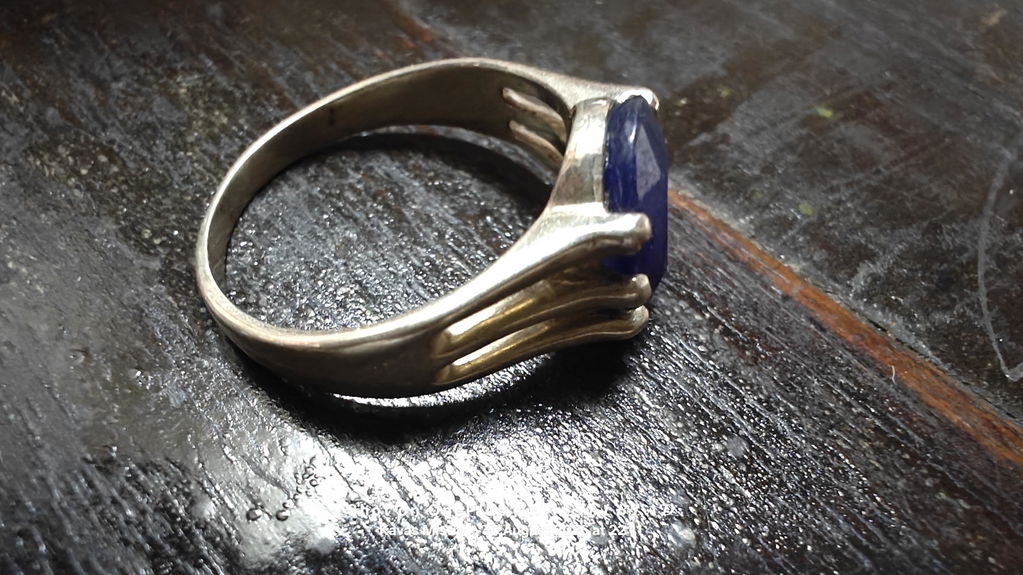
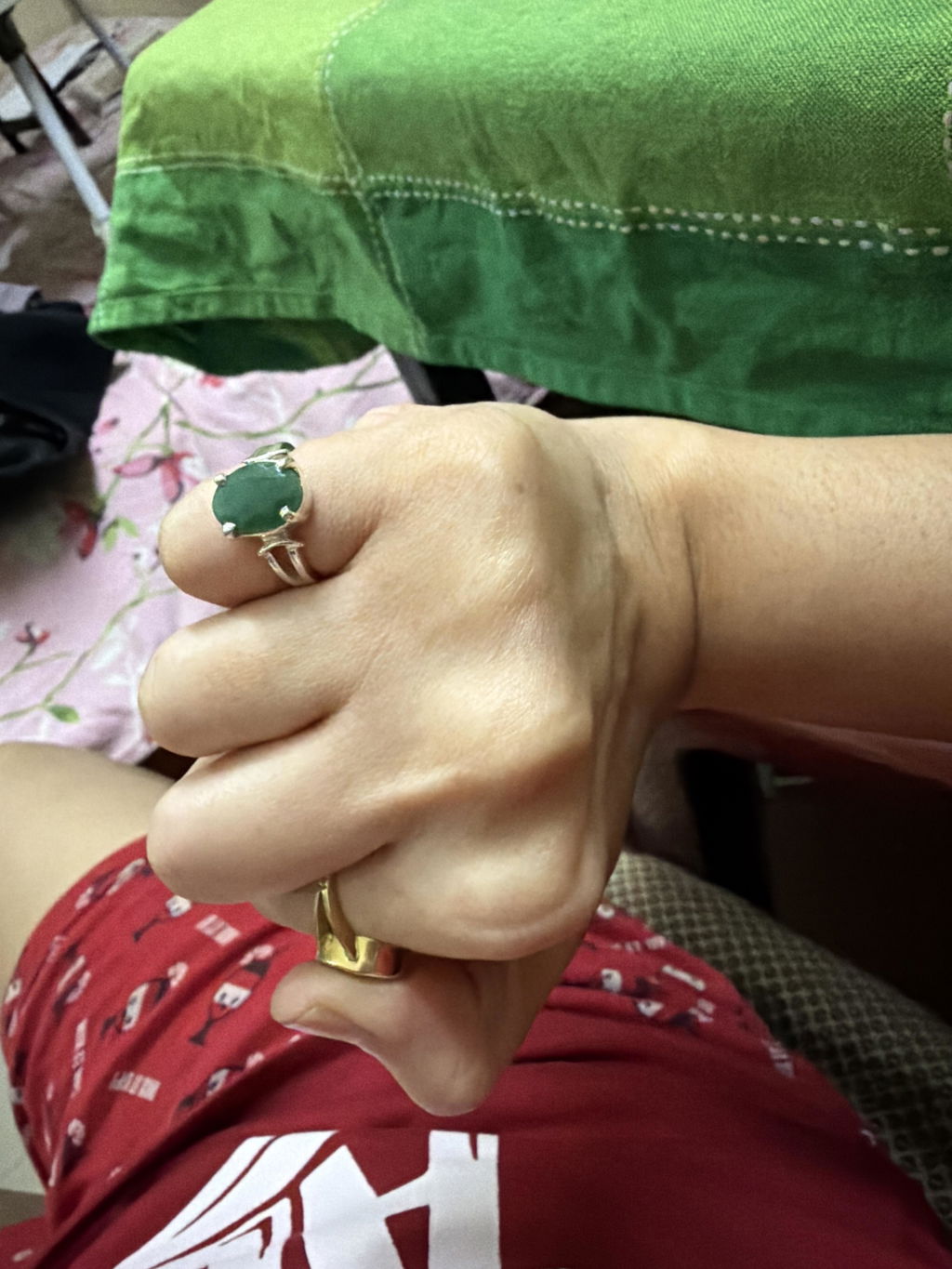
One of the most widespread gemstone myths Indians still believe is that a darker, more intensely coloured stone is always more powerful and more valuable. This belief drives buyers to pay premiums for deeply saturated rubies, near-opaque blue sapphires, and heavily toned emeralds, when in fact these stones may be worth considerably less than a well-balanced, medium-toned specimen.
The truth is that gemstone colour quality is evaluated on three distinct axes: hue (the actual colour), tone (how light or dark), and saturation (how vivid or muted). According to established gemological standards, the most prized stones in virtually every major category sit at medium to medium-dark tones with high saturation, not at the darkest end of the spectrum. A Blue Sapphire (Neelam), ruled by Shani (Saturn) in Vedic astrology, that reads as near-black under indoor lighting has likely crossed into what the trade calls "extinction," where the stone absorbs so much light that its colour disappears in anything but direct sunlight. Such a stone is less desirable, not more.
Why Buyers Conflate Darkness With Quality
This myth has a logical origin. For centuries, Indian buyers evaluated gemstones by candlelight or diffuse natural light, conditions under which a darker stone may appear richer and more commanding. The association between deep colour and quality was practical in that environment. Today, with fluorescent office lighting and LED interiors being the standard, the same dark stone can look dull and lifeless.
Gemologists recommend evaluating any coloured gemstone under at least three types of lighting: daylight-equivalent lighting, incandescent light, and direct sunlight. A stone that looks vivid and alive under all three is genuinely well-coloured. A stone that only impresses in one setting has been selected for that one setting.
The Specific Case of Ruby and Blue Sapphire
For Ruby (Manik), the most celebrated colour standard in the trade is "Burmese pigeon-blood," a vivid, slightly warm red with strong fluorescence under ultraviolet light. This is a medium-red, not a dark brownish-red, which is what many Indian buyers are routinely shown and told is superior. A Mozambique or Sri Lankan ruby of equivalent tone and saturation performs equally well in Vedic astrological tradition. According to Vedic astrology, Manik is governed by Surya, the Sun, and its effectiveness is traditionally linked to the stone being natural and untreated, not to a specific depth of colour.
For Blue Sapphire, the celebrated "Royal Blue" or "Ceylon blue" standard describes a vivid, medium-dark blue, not an inky midnight colour. Sri Lankan Neelam stones from Ratnapura, sourced through Jaipur's gem trade, regularly reach this standard and are widely considered among the finest for astrological purposes.
The Myth That Origin Determines Astrological Power
Ask most Indian buyers which ruby is more powerful, a Burmese one or a Mozambican one, and the overwhelming majority will say Burmese without hesitation. This belief, that origin country determines a gemstone's astrological potency, is one of the most commercially exploited gemstone myths Indians still believe. It has been used for decades to justify dramatic price differences between stones of otherwise identical quality.
The traditional guidance is rooted in the fact that certain regions have historically produced gemstones of exceptional quality. Burma (Myanmar) produced fine rubies for centuries. Sri Lanka has long been a source of premium sapphires and cat's eye chrysoberyl. Colombia is celebrated for emeralds. These associations are real. But the logical leap from "historically excellent origin" to "only this origin works astrologically" is not supported by classical Vedic texts.
What the Brihat Parashara Hora Shastra Actually Says
The Brihat Parashara Hora Shastra, one of the foundational classical texts of Vedic astrology, discusses gemstones at length. It emphasises that a stone must be natural, free from significant defects, and properly set to be astrologically effective. It does not specify that only stones from a particular country will activate the influence of a planetary ruler. The emphasis in classical tradition is on the quality and integrity of the stone, not its passport.
This distinction matters because origin-based pricing can lead buyers to overpay for an average Burmese stone when an excellent Mozambican or Sri Lankan stone of the same species would serve them far better, both aesthetically and according to the tradition they are following.
When Origin Does Matter
To be fair to the nuance here, origin does matter for certain quality markers that are genuinely associated with specific regions. Burmese rubies frequently display a characteristic strong red fluorescence under UV light that intensifies their colour in natural light. Ceylon sapphires often have a characteristic silky texture caused by fine rutile inclusions. These are real, observable quality signals, not mythology. The point is that origin is a proxy for quality, not a direct source of astrological power in itself.
Looking for natural gemstone rings that your astrologer will approve of? At Myra Gems, every stone is sourced for quality first, with natural, untreated specimens available across all major categories. Explore all natural gemstone rings
Gemstone Myths Around Inclusions: Is a "Clean" Stone Really Better?
A natural inclusion is not a flaw. It is, in many ways, the opposite. Yet one of the most persistent gemstone myths Indians still believe is that any visible mark, crack, or internal feature inside a gemstone makes it inauspicious, defective, or ineffective for astrological wear. This belief causes buyers to reject perfectly fine natural stones in favour of heavily treated or synthetic alternatives, which carry far greater astrological and financial risk.
Inclusions are internal features formed during a gemstone's growth inside the earth. They are evidence of a stone's natural origin. A natural ruby's inclusions, such as fine rutile needles, fluid-filled fingerprints, or tiny crystal inclusions from the host rock, tell a geologist exactly where and how that stone formed. A synthetic ruby, grown in a laboratory over a few weeks, will look flawless to the naked eye but will display characteristic curved growth lines under magnification.
What Classical Vedic Tradition Actually Prohibits
Classical Vedic texts do caution against certain types of inclusions in gemstones worn for astrological purposes. The Ratnapariksha, an ancient Sanskrit text dedicated to the evaluation of precious stones, describes gemstones with cracks that reach the surface, stones that are dull without internal fire, and stones with unusual surface irregularities as unsuitable for wear. The operative word is "cracks that reach the surface," which are structural weaknesses, not sealed internal inclusions. A deeply internal feather or a cluster of tiny mineral crystals does not fall under this traditional caution.
The Practical Gemological View
A natural, untreated gemstone can be identified by its inclusion pattern. Gemologists recommend learning to distinguish between inclusions that affect structural integrity (long fractures, cleavage cracks reaching the surface) and inclusions that are simply part of the stone's natural character. A well-cut ruby from Mozambique with a Mohs hardness of 9, the same as sapphire, and a characteristic rutile silk pattern is structurally sound and gemologically significant. That same stone, rejected by an uninformed buyer as "flawed," represents exactly the kind of natural quality that Vedic tradition values.
At Myra Gems, our gemologists regularly encounter customers who discard genuinely beautiful natural stones because of minor internal features, then unknowingly consider heavily treated alternatives. Clarity matters, but natural character matters more.
The Ratti Weight Myth: Does More Weight Mean More Effect?
Few gemstone myths Indians still believe are as commercially convenient as the idea that a heavier stone is always more effective. The recommendation to wear "at least 5 ratti" or "a minimum of 7 ratti" for astrological results is heard constantly in markets from Jaipur to Chennai, yet it has no consistent basis in classical Vedic texts.
The traditional guidance is that a gemstone should be of sufficient size to be set properly in a ring or pendant and to be visible, since it must come in contact with the skin to be astrologically effective according to most traditions. Beyond this practical minimum, classical texts do not specify weight thresholds in ratti (one ratti is approximately 0.182 grams, or just under one carat) as determinants of a stone's power.
Where the Ratti Obsession Comes From
The ratti weight fixation has two sources. The first is genuinely practical: a stone that is too small to set well or too thin to survive daily wear is not ideal. The second is commercial. A heavier stone costs more. Tying minimum weight to astrological outcome is an effective way to move buyers toward higher price points. This does not mean all gemstone sellers are acting in bad faith. The myth has become so embedded in the culture that many sellers genuinely believe it themselves.
The most important factor when buying a gemstone for astrological wear is quality of colour, natural origin, and absence of structural defects, not weight beyond what is necessary for a sound setting.
The Right Way to Think About Size
A good rule of thumb from the trade is this: a stone should be sized to suit the wearer's hand and the setting style, while remaining natural and undamaged. A 3-ratti natural, unheated Yellow Sapphire (Pukhraj) of excellent colour, governed by Guru (Jupiter) in Vedic tradition, is far preferable to a 9-ratti treated or synthetic stone. Weight amplifies nothing on its own.
Not sure how to evaluate a gemstone before you buy? Our guidance page walks you through every factor that actually matters. Visit the Myra Gems gemstone guidance page
Gemstone Myths About Touching: "Never Let Anyone Else Touch Your Stone"
This particular belief sits somewhere between folk superstition and genuine Vedic tradition. The idea that a gemstone absorbs the energy of everyone who touches it, and that allowing another person to handle your ring will dilute or corrupt its astrological influence, is one of the most socially embedded gemstone myths Indians still believe. It causes real anxiety among wearers, particularly around borrowed jewellery, gift-giving, and jewellery repairs.
According to Vedic astrology, gemstones are believed to act as conduits between the wearer and the planetary energy they are meant to channel. The tradition of purifying a gemstone before wearing it, typically by immersing it in raw milk, Gangajal, or honey overnight, and then reciting the relevant mantra, is widely practised and described in classical astrological tradition. This ritual is understood as a way of attuning the stone to the wearer's energy before first use.
What Vedic Texts Say and What They Do Not
Classical astrological texts describe the purification ritual as a one-time process performed before the stone is first worn. They do not describe gemstones as perpetually vulnerable to contamination from casual contact. The logic of ongoing contamination, where a stone must never be touched by another person ever again, is a folk extension of a one-time traditional practice, not something derived from the texts themselves.
Gemologists recommend removing rings during heavy physical work, exposure to chemicals, or sleep, not because of energetic contamination but because settings can bend and stones can chip. These are practical recommendations that have nothing to do with the purity of the stone.
The Gift-Giving Question
A related sub-myth holds that a gemstone ring should never be gifted, because the giver's energy remains in the stone. In practice, gemstone rings are among the most auspicious gifts in Indian culture, given at weddings, engagements, birthdays, and milestones. The correct practice, if one follows Vedic tradition, is simply to perform the purification ritual before wearing a gifted stone, exactly as one would for a newly purchased piece. Explore Myra Gems' full collection of gemstone rings for gifting and personal wear across all categories.
Gemstone Myths About Cracks and Breaks: A Cracked Stone Is Not a Curse
Perhaps the most anxiety-inducing of all gemstone myths Indians still believe is that a gemstone that chips, cracks, or breaks while being worn has absorbed a misfortune that was meant for the wearer, and that the wearer has now been protected by the stone's sacrifice. While this belief is emotionally comforting in its own way, it has no basis in classical Vedic texts and often leads wearers to take unnecessary actions, including replacing a perfectly usable stone or disposing of a damaged ring in a river.
A natural gemstone can chip or crack for entirely mundane reasons. Hitting a hard surface, an accidental knock against a countertop, a poor setting that allows the stone to move, all of these can cause physical damage. Sapphire and ruby have a Mohs hardness of 9, making them highly resistant to scratching, but they have directional cleavage and can chip along certain planes when struck at the right angle. Pearl, coral, and opal are considerably softer and more vulnerable. These are physical properties, not spiritual events.
The Origin of the Protective Stone Myth
The idea of the stone as a protective shield does have a distant root in Vedic tradition. Certain texts describe gemstones as amplifiers of planetary energy, and some astrological interpretations suggest that a stone may be affected if its wearer goes through a particularly difficult planetary period. However, this is very different from the folk belief that a cracked stone has literally intercepted a physical blow or accident on behalf of its wearer.
The traditional guidance is to replace a damaged stone simply because a damaged stone may not sit properly in its setting, may have compromised structural integrity, and because a natural, undamaged stone is considered more suitable for astrological wear. The replacement is practical and aesthetic, not a ritual response to averted disaster.
What to Actually Do With a Cracked Stone
If a gemstone chips or cracks, consult a reputable jeweller to assess whether the stone can be re-polished or whether the damage affects the setting. If the stone is beyond repair, replacing it with a natural, undamaged specimen of the same species is entirely appropriate. There is no classical injunction about how to dispose of a broken gemstone, and the practice of throwing rings into rivers has caused significant harm to water bodies over time.
Gemstone Myths About Substitutes: "Any Red Stone Will Do for Mars"
The belief that gemstone substitutes carry identical astrological weight to the primary stone is one of the most consequential gemstone myths Indians still believe, because it leads wearers to spend money on stones they believe will deliver results they are unlikely to receive.
Classical Vedic astrology identifies nine primary gemstones for the nine grahas: Ruby for Surya, Pearl for Chandra, Red Coral (Moonga) for Mangal, Emerald (Panna) for Budh, Yellow Sapphire for Guru, Diamond for Shukra, Blue Sapphire for Shani, Hessonite Garnet for Rahu, and Cat's Eye Chrysoberyl for Ketu. Alongside these primary stones, many astrological traditions list substitute stones, sometimes called upratna, which are understood to have a weaker but similar energetic affinity.
The distinction matters. A substitute is not an equivalent. According to Vedic astrology, a primary stone like natural Red Coral is believed to channel Mangal's energy more directly than a substitute like carnelian or red jasper. The substitute is recommended when the primary stone is financially out of reach or otherwise unavailable, not as a permanent equal alternative.
The Commercial Exploitation of Substitute Myths
The myth has been commercially exploited in two directions. Some sellers promote expensive primary stones by dismissing substitutes entirely. Others sell cheap coloured glass or low-grade stones as "powerful substitutes" for premium gems. Neither approach serves the buyer. The honest position is that a genuine substitute, a natural stone of the correct species, is always better than a synthetic primary stone, and that budget and quality should both be part of the decision.
Category
Quick Answer: Which to prioritise
Quick Answer
A natural primary stone of moderate quality outperforms a synthetic or treated "premium" stone in Vedic tradition
Primary stone, natural, moderate quality
Recommended first choice
Primary stone, synthetic or heavily treated
Not recommended
Substitute stone, natural
Acceptable when primary is out of reach
Substitute stone, synthetic or treated
Not recommended
Coloured glass marketed as a substitute
Avoid entirely
Explore Authentic Natural Gemstone Rings at Myra Gems Our collection covers all nine Vedic primary gemstones in natural, untreated form, each selected by our in-house gemology team. Browse the full collection
What to Know Before Buying Gemstones: Advice From Myra Gems' Gemologists
After more than 30 years of handling natural gemstones and guiding buyers across India, our team has identified the practical knowledge gaps that most often lead to poor purchasing decisions. These are not generic tips. They are drawn from real conversations, real stones, and real mistakes that buyers make repeatedly.
First, always ask whether the stone has been treated. Heat treatment is the most common intervention in the gemstone trade. A heated Blue Sapphire may look identical to an unheated one to the untrained eye, but the distinction matters both for value and, according to many astrological traditions, for effectiveness. A natural, unheated stone from Sri Lanka or Burma will always command a premium over a heated one of otherwise similar appearance. Ask directly. A knowledgeable seller will answer directly.
Second, understand that weight and price are not the same as quality. At Myra Gems, we have seen buyers choose a 9-ratti heated stone over a 4-ratti natural one because the first seemed like a better deal per ratti. It rarely is. The most important factor when buying any gemstone is the combination of natural origin, absence of structural defects, and accurate colour evaluation, not gram weight.
Third, be cautious of sellers who guarantee specific life outcomes from wearing a gemstone. Vedic astrology frames gemstones as tools that work in conjunction with a planetary period and an individual's birth chart. No honest astrologer or gemologist will promise that a Yellow Sapphire will guarantee a job promotion or that a Blue Sapphire will produce results within 40 days. These guarantees are sales tactics, not tradition.
Fourth, pay attention to setting quality. A gemstone that is not touching the skin in a ring setting, or that is tilted or poorly held, is not serving its intended purpose according to Vedic tradition. The metal, whether silver or gold, should be appropriate for the stone, and the stone should be set open-backed so light can pass through it. Closed-back settings that seal the stone away from contact with the skin are not ideal for astrological wear.
Fifth, a stone sold as "natural" should look natural under magnification. A natural, untreated gemstone can be identified by its characteristic inclusions under a loupe or microscope. If a seller refuses to let you examine a stone under magnification, treat that as a significant warning sign. Reputable sellers at Myra Gems and in the established Jaipur gem trade will always permit close examination.
FAQ: Common Questions About Gemstone Myths in India
Q: Is it true that a gemstone stops working after a few years? A: No, a natural gemstone does not "expire" or stop working after a set period. This myth likely stems from misinterpretations of Vedic astrological cycles. What classical tradition actually describes is that the influence of a planetary period (mahadasha or antardasha) changes over time, and a gemstone worn for a specific period may become less relevant as the planetary influence it was meant to support shifts. The stone itself does not degrade astrologically. If a gemstone no longer feels relevant, the correct step is to consult a qualified Vedic astrologer about your current planetary chart, not to assume the stone has expired.
Q: Can wearing the wrong gemstone cause harm? A: According to Vedic astrology, wearing a gemstone that strengthens a malefic planet in your birth chart is traditionally considered inadvisable. For example, if Saturn (Shani) is placed in a difficult position in your chart, wearing a Blue Sapphire (Neelam) without proper astrological guidance could, according to tradition, amplify that difficult energy rather than resolve it. This is why qualified astrological consultation is considered essential before choosing any gemstone for astrological purposes. At Myra Gems, we always recommend consulting a qualified Vedic astrologer before making a gemstone selection, and our gemstone guidance page connects buyers with resources for exactly this purpose.
Q: Does a gemstone need to touch the skin to work? A: Yes, according to the vast majority of Vedic astrological tradition, a gemstone worn for astrological purposes should ideally touch the skin. This is why open-backed ring settings are preferred over closed-backed ones for astrological rings. The traditional understanding is that the stone acts as a conduit between planetary energy and the wearer's body, and direct skin contact is considered essential for this connection. Pendants worn close to the skin on a short chain are also considered appropriate for most stones.
Q: Is a synthetic gemstone just as effective astrologically as a natural one? A: No. Virtually all Vedic astrological tradition holds that only natural gemstones carry planetary energy. A synthetic stone, grown in a laboratory over days or weeks, does not carry the same properties as a stone formed over millions of years under geological pressure. The Ratnapariksha and related classical texts consistently describe gemstones as natural earth products. Synthetic stones may be visually identical but are not considered substitutes in classical tradition. Always confirm that the stone you are purchasing is natural, and ask your seller to explain what "natural" means in the context of that specific stone.
Q: Does the metal setting affect the gemstone's astrological effectiveness? A: Yes, according to Vedic tradition, the metal in which a gemstone is set carries its own planetary associations and should ideally complement the stone. Gold is traditionally associated with Surya (the Sun) and Guru (Jupiter), making it a natural pairing for Ruby and Yellow Sapphire. Silver is associated with Chandra (the Moon) and is considered appropriate for Pearl and Blue Sapphire in many traditions. Panchdhatu (a five-metal alloy) and ashtadhatu (eight metals) are also used in certain traditions. The specific recommendation will depend on the stone and the wearer's chart, so consulting an astrologer before choosing the setting metal is advisable.
Q: Should I remove my gemstone ring while sleeping or bathing? A: Removing a gemstone ring during sleep and bathing is recommended for practical reasons, not astrological ones. Sleep can bend thin ring shanks, and prong settings can catch on fabric. Soap, shampoo, and hot water can build up beneath a stone, dulling its surface over time. Chlorinated water in swimming pools can affect certain metals. Pearl and opal are particularly sensitive to moisture, acids, and temperature changes and should always be removed before bathing. Ruby and sapphire are far more robust but are still best removed during physically demanding tasks.
Q: Is it true that you should only buy a gemstone on a specific day of the week? A: This is a tradition with genuine classical roots, though it is less binding than many buyers believe. Vedic tradition associates each day of the week with a planetary ruler: Sunday with Surya (Ruby), Monday with Chandra (Pearl), Tuesday with Mangal (Red Coral), Wednesday with Budh (Emerald), Thursday with Guru (Yellow Sapphire), Friday with Shukra (Diamond), and Saturday with Shani (Blue Sapphire). Purchasing or first wearing a gemstone on its associated planetary day is considered auspicious in this tradition. However, classical texts do not state that a gemstone purchased on the wrong day will be ineffective. The day-of-week recommendation is a traditional preference, not a hard requirement.
Q: Does Myra Gems offer guidance on which gemstone is right for me? A: Yes. At Myra Gems, we do not recommend specific gemstones for astrological purposes without an astrologer's input, because the right stone depends entirely on an individual's birth chart, current planetary period, and the astrologer's reading. What our gemology team can help with is evaluating stone quality once an astrologer has made a recommendation, explaining the differences between natural, treated, and synthetic stones, and ensuring that the stone you select meets the quality standards appropriate for astrological wear. Visit our gemstone guidance page to understand how to approach the buying process correctly.
Q: Can two people wear the same gemstone ring and have opposite effects? A: Yes, and this is one of the most important reasons gemstone selection should be personalised. According to Vedic astrology, the effect of a gemstone depends on the position and strength of its governing planet in the wearer's individual birth chart. Blue Sapphire (Neelam) may bring tremendous stability and clarity to someone for whom Saturn is a yoga-karaka (a planet that produces beneficial results), while the same stone may be unsuitable for someone whose Saturn is positioned differently. This is not a myth. It is the core logic of astrological gemstone selection, and it is why generalised recommendations like "Capricorns should wear Neelam" are always incomplete without a full chart analysis.
Conclusion: Respect Tradition, Demand Accuracy
The gemstone myths Indians still believe did not emerge from nowhere. Many carry the fingerprints of genuine Vedic tradition, stretched, simplified, and in some cases commercially amplified over centuries. Understanding where a belief comes from, whether it is rooted in classical texts, practical gemological knowledge, or commercial convenience, is the first step toward making genuinely informed decisions.
Natural gemstones are remarkable objects. Formed over millions of years, carrying real optical and physical properties that distinguish them from synthetic or treated alternatives, they deserve to be understood accurately. Vedic astrology is a sophisticated system with a rich textual tradition. It also deserves to be understood accurately, rather than reduced to myths about dark colours and cracked stones and forbidden days.
The information in this article is for educational purposes. Always consult a qualified Vedic astrologer before wearing any gemstone for astrological reasons, and approach quality evaluation with the same care you bring to the astrological decision.
Myra Gems has spent more than 30 years helping Indian buyers navigate exactly this landscape, where tradition and commerce intersect, and where accurate information is the most valuable thing a gemstone buyer can have. Explore our full collection of natural gemstone jewellery when you are ready to make a decision grounded in both astrological guidance and gemological integrity.