Most people who own a natural gemstone ring understand it is precious. Far fewer know exactly how to keep it that way.
A certified Ruby (Manik) governed by Surya, a Neelam set in silver for Shani, a Panna sourced from Colombia for Budh, a Cat's Eye (Lehsunia) in gold for Ketu: each of these stones has its own mineral composition, hardness level, and precise sensitivity to the everyday substances that pass over a ring-wearing hand dozens of times a day. What is safe for one stone can permanently damage another. The mild soap and water method that restores lustre to a Neelam will erode the nacre of a Moti if used repeatedly. The brief Gangajal soak that ritually purifies a Manik ring can disturb the fracture-filling of a Panna if it lasts more than a minute or two.
This is the question the Myra Gems gemology team answers most frequently: how do you care for a natural gemstone ring so it looks as vivid ten years from now as the day you first wore it? The answer depends on which stone you have, what metal it is set in, how the stone has been treated, and which daily habits you are currently practising without realising they are causing slow, cumulative harm.
This guide covers everything a natural gemstone ring owner in India needs to know. It explains why different stones require different care, establishes daily protective habits, provides a stone-by-stone home cleaning guide for every gemstone across Myra Gems' collections, covers correct storage, setting inspection, silver and gold maintenance, seasonal care specific to the Indian climate, and the professional care schedule that prevents the most common avoidable damage. It also addresses the question specific to astrological gemstone wearers: how do care, cleaning, and Vedic ritual interact?
According to Vedic astrology, the relationship between a gemstone and its wearer deepens through consistent, mindful contact. As described in the Ratnapariksha, the classical Sanskrit gemological text, the condition and clarity of a gemstone are considered indicators of its quality and potency within the astrological tradition. Keeping your ring clean and well-maintained is not contrary to that intention — it is the physical foundation that makes the stone's continued efficacy possible.
Why Different Gemstones Need Different Care: Hardness, Porosity, and Treatment
Understanding why gemstone care cannot be one-size-fits-all is the single most useful piece of knowledge a ring owner can have. Every correct care decision flows from three properties: hardness, porosity, and treatment status.
The Mohs hardness scale measures a gemstone's resistance to surface scratching, rated from 1 (softest) to 10 (hardest). Ruby and Blue Sapphire sit at Mohs 9, among the most durable natural stones in existence. Pearl and Coral register between 2.5 and 3.5, which means a fingernail pressed firmly across them can scratch the surface. Opal falls at approximately 5.5 to 6. Cat's Eye Chrysoberyl — one of the harder astrological gemstones — sits at Mohs 8.5. These are not abstract numbers. A cleaning method safe for a Neelam will physically abrade a Moti if applied repeatedly.
Porosity is the second factor. Opal, Turquoise, Coral, and Pearl have a porous or layered structure that absorbs liquids. Acids, perfumes, chemicals, and even prolonged exposure to plain water can penetrate these stones and cause discolouration, surface film, or structural damage over time. Hard, non-porous stones such as Ruby, Blue Sapphire, Yellow Sapphire, Cat's Eye Chrysoberyl, and Garnet are far more tolerant of moisture and careful cleaning solutions.
Treatment status is the third factor, and it matters particularly for the Indian astrological jewellery market. Most Emeralds (Panna) sold commercially — including many fine stones from Colombia and Zambia — are treated with oils or resins to fill natural surface-reaching fractures. This is disclosed in GRS and Gubelin laboratory reports. It also means that soaking, heat, or chemical exposure can disturb the filling and visibly alter the stone's appearance. Similarly, the majority of Blue Sapphires available commercially have been heat-treated to optimise colour. Unheated Ceylon Blue Sapphire from Sri Lanka commands a significant premium over heated equivalents at comparable clarity, a fact consistently observed in Jaipur and Bangkok trade pricing. Your GIA or IGI laboratory certificate states treatment status clearly; reading it before cleaning is not optional.
At Myra Gems, our gemologists regularly encounter customers who have been cleaning all their rings the same way, using whatever product is available in the home. The most common outcomes are a Pearl or Opal that has lost its surface lustre or developed a white film, and an Emerald whose fracture-filling has been disturbed by soaking. The third most common is a Coral ring with a surface fade caused by repeated contact with hand cream. All of these situations are avoidable with stone-specific knowledge — and none of them are reversible at home.
Quick Answer
Safest method for most gemstones
Mild liquid soap + lukewarm water + soft-bristled brush, dry immediately
Stones that must never be soaked
Pearl (Moti), Opal, Turquoise, Red Coral (Moonga)
Stones requiring damp cloth only
Emerald (Panna), Pearl, Coral, Opal, Turquoise
Stones safe for mild soap and water
Ruby, Blue Sapphire, Yellow Sapphire, Cat's Eye, Amethyst, Garnet, Golden Topaz
Never use on any gemstone
Bleach, ammonia, toothpaste, commercial silver dip, steam, ultrasonic (for most stones)
Professional inspection recommended
Every 12-18 months for daily-wear rings
Daily Habits That Protect Your Gemstone Ring from Everyday Damage
The most important factor when caring for any natural gemstone ring is not the cleaning method — it is the daily habits that determine how quickly cleaning becomes necessary and how much cumulative wear the ring sustains over months and years.
Gemologists recommend removing your gemstone ring before a specific set of activities. These are not overly cautious guidelines. They reflect actual chemical and physical interactions between common household substances and the materials in your ring.
Remove your gemstone ring before the following activities:
Washing dishes or using any cleaning product. Even mild washing-up liquid creates a film over settings and penetrates porous stones over time. Bleach, phenyl, and acid-based limescale removers — widely used in Indian kitchens and bathrooms — can permanently damage both stones and silver settings in a single extended contact. Gold settings are more resistant but not immune.
Applying skincare products. Hand cream, sunscreen, perfume, and body lotion leave a residue that accumulates in the gap between stone and setting, dulling the stone's appearance from beneath rather than from the surface. A ring whose stone looks foggy despite regular cleaning is usually suffering from this buildup beneath the collet, not on the stone face.
Cooking, particularly with acidic ingredients. Lemon juice, tamarind, raw mango, vinegar, and tomato are mildly acidic. Repeated contact with these substances over months affects both sterling silver settings and softer organic stones like Coral and Pearl. Even hard stones develop surface film faster in kitchens with daily acidic exposure.
Swimming and bathing. Chlorinated pool water attacks silver settings and affects surface finishes on softer stones. Sea water accelerates metal tarnishing. Bath and shower products leave residue in settings. A single shower does not damage a Neelam ring; a year of daily showers without drying leaves noticeable film on both stone and prongs.
Physical activity and manual work. Gardening, gym sessions, heavy lifting, construction work, and any activity involving impact or abrasive contact risk chipping stone edges and bending prongs. Cat's Eye Chrysoberyl is tough enough for most daily wear, but a sharp blow to a prong corner can chip even a Mohs 8.5 stone at thin edges.
A customer came to Myra Gems after wearing her Panna ring daily for eight months without removing it for cooking or dishwashing. The stone itself was undamaged, but the silver prongs had worn significantly from chemical contact and required professional re-tipping. The fracture-filling in the Emerald was also slightly disturbed near the culet. Removing the ring before these activities would have prevented both problems entirely.
The simplest daily practice: put your ring on after all skincare products have absorbed in the morning. Remove it before your last handwash at night. This single habit eliminates the majority of buildup that causes gemstones to look dull without any cleaning at all.
Certified Natural Gemstone Rings, Ready to Wear Every ring at Myra Gems comes with a recognised laboratory certificate from GIA, IGI, or GRS confirming natural origin and treatment status. Knowing exactly what your stone is made of is the first step to caring for it correctly. Explore certified natural gemstone rings at Myra Gems
How to Care for Gemstone Rings: Complete Stone-by-Stone Cleaning Guide
Each gemstone requires a different approach. The following covers every natural gemstone found across Myra Gems' collections, sourced from Burma, Sri Lanka, Mozambique, Zambia, Colombia, Jaipur, and the gem trade centres of Bangkok.
How to Clean Ruby (Manik) Rings
Ruby, known as Manik in Vedic tradition and associated with Surya (the Sun), is a Corundum mineral at Mohs 9. Natural Burmese rubies from the Mogok Valley are the most prized variety globally; Mozambique rubies from the Montepuez region have emerged as a significant secondary source since the early 2000s. Both are stable and durable under careful home cleaning.
To clean a Manik ring, mix a few drops of mild liquid soap in lukewarm water, dip a soft-bristled toothbrush, and gently scrub around the stone and beneath the setting, where sebum and product residue accumulate most densely. Rinse with clean lukewarm water. Dry thoroughly with a lint-free cloth immediately after rinsing. Never use boiling water, as sudden thermal shock can fracture stones with existing natural inclusions — a common feature even in certified, natural Rubies.
Exception: if your Manik is fracture-filled or clarity-enhanced, which is standard practice in commercial-grade stones, avoid soaking entirely and limit care to a barely damp cloth. Check your IGI or GRS report for treatment disclosure.
How to Clean Blue Sapphire (Neelam) Rings
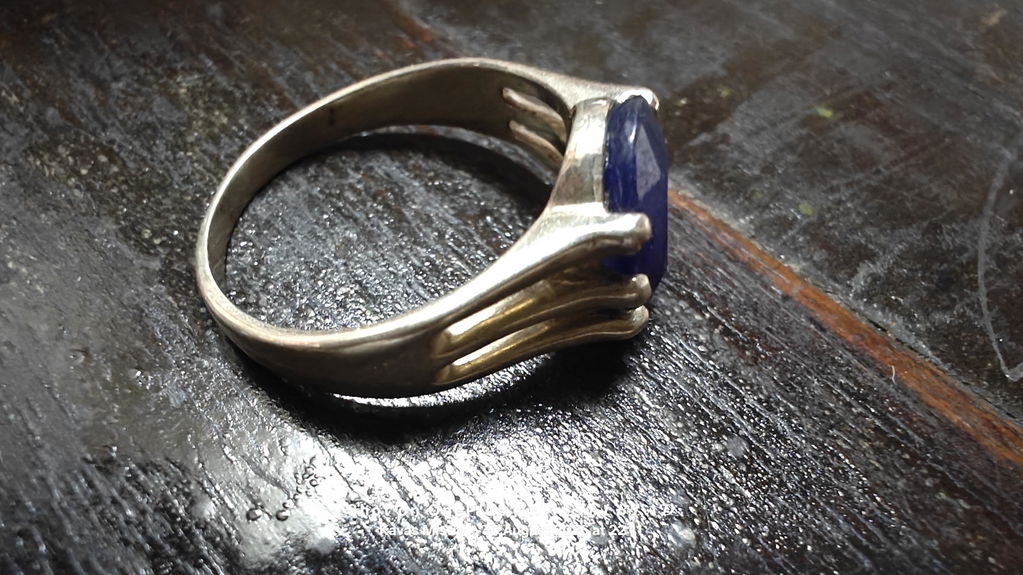
Blue Sapphire, called Neelam and associated with Shani (Saturn), shares Ruby's Corundum composition at Mohs 9. Ceylon Blue Sapphire from Sri Lanka — particularly stones with the characteristic cornflower blue and eye-clean clarity — remains the reference standard in the Indian astrological market. Natural, unheated Neelam responds well to the mild soap and lukewarm water method with a soft brush. Rinse thoroughly and dry immediately.
For heated Blue Sapphire, which is far more common commercially, limit cleaning to a damp cloth rather than soaking. Repeated prolonged water exposure can affect the heat-altered internal structure of some treated stones over extended time. Your laboratory certificate states whether your stone is heated or unheated. Stones certified as natural and unheated by IGI or GRS should be cleaned with the full soap-and-water method without concern.
One seasonal note specific to India: monsoon humidity causes silver settings to tarnish faster than at other times of the year. During June to September, dry and store your Neelam ring with particular care after each wearing.
How to Clean Yellow Sapphire (Pukhraj) Rings
Yellow Sapphire, or Pukhraj, is associated with Guru (Jupiter) and equally hard at Mohs 9. Ceylon Pukhraj from Sri Lanka — in the warm golden-yellow to canary tone, with good transparency and minimal inclusions — is widely considered the finest variety for Vedic astrological purposes. The mild soap and lukewarm water method works well for both heated and natural unheated stones.
Yellow Sapphire set in gold, as Vedic tradition recommends for Jupiter stones, benefits from a final soft cloth buff after cleaning to restore warmth to the metal. Gold accumulates a dull film from skincare products over time; a thorough rinse followed by immediate drying removes most of it without polishing compound.
A note for those who perform Vedic purification rituals: after any immersion in Gangajal or raw cow's milk, dry the ring thoroughly with a clean, soft cloth before rewearing. Prolonged moisture exposure — even from ritual liquids — accelerates tarnishing in silver settings over time and can leave residue beneath the stone if not removed.
How to Clean Emerald (Panna) Rings
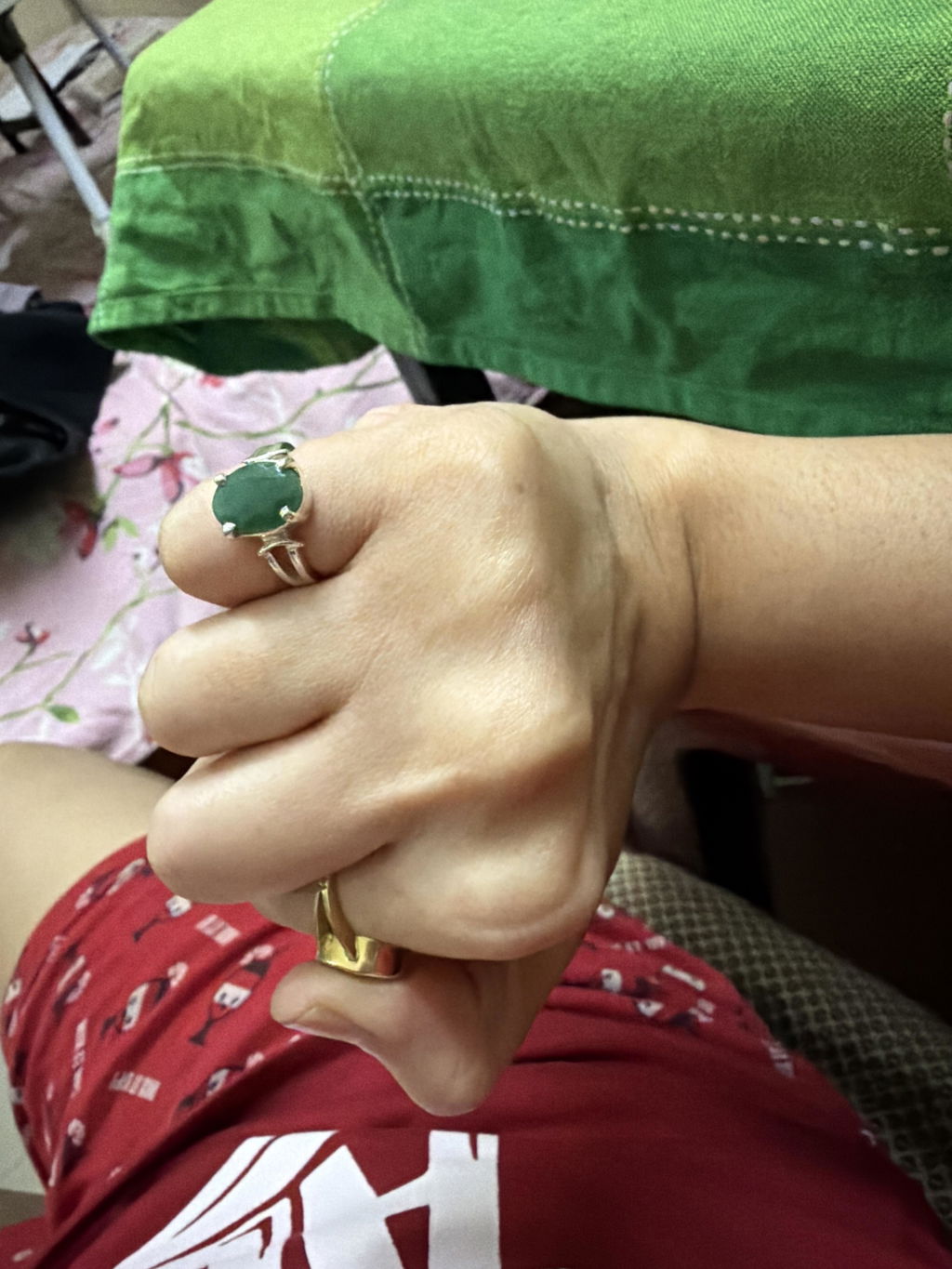
Emerald, or Panna, associated with Budh (Mercury), is the most care-intensive of the major astrological gemstones. Rated at Mohs 7.5 to 8, Panna almost always contains natural inclusions and fractures that gemologists call a "jardin." Colombian Emeralds and Zambian Emeralds — the two primary origins in quality Indian jewellery — are frequently treated with cedar oil or synthetic resins, disclosed in GRS and Gubelin certificates.
Never soak a Panna ring. Never use ultrasonic cleaners, steam, or chemical jewellery dips on it. The correct method is a barely damp soft cloth wiped gently across the surface and around the setting, followed by immediate thorough drying. At Myra Gems, we advise Panna wearers to limit home care entirely to dry cloth polishing, with a professional clean from a trusted jeweller no more than once a year if genuinely needed. Aggressive cleaning is not appropriate for treated Emerald under any circumstances.
The Vedic Gangajal ritual soak, if practised for a Panna ring, should last no more than two to three minutes, followed by immediate rinsing in clean water and thorough drying. Extended soaking will disturb the fracture-filling.
Explore certified natural Emerald rings for men and women
How to Clean Pearl (Moti) Rings
Pearl, or Moti, associated with Chandra (the Moon), is among the most fragile gemstones at Mohs 2.5 to 3. Natural Basra Pearls from the Persian Gulf and South Sea Pearls from Australia and Indonesia are composed of nacre — a biological calcium carbonate material sensitive to acids, heat, abrasion, and perfume alcohol.
Never soak a Moti ring. Never clean it with soap solutions of any strength. The correct method is a clean, slightly damp lint-free cloth wiped gently after each wearing to remove sweat and skin oils. Air dry fully before storing. Keep Pearl rings away from perfume, hairspray, and hand sanitiser; the alcohol content erodes nacre over repeated contact and cannot be reversed. A traditional practice of wiping Moti jewellery with clean raw silk after wearing is both effective and gentle. It causes no surface damage and aligns well with gemological guidance.
Vedic purification of a Pearl ring is traditionally done with a brief wipe using Gangajal on a soft cloth, not by immersion. Soaking dissolves nacre over time at a rate that is invisible in any single session but significant across months.
How to Clean Red Coral (Moonga) Rings
Red Coral, or Moonga, associated with Mangal (Mars), is an organic stone like Pearl. Mediterranean and Japanese Coral are the most referenced in Vedic tradition, with Italian Sardo coral from Sardinia considered particularly fine among Indian buyers. At Mohs 3 to 3.5, Coral is porous and reactive to acids, including the natural acidity of sweat, citrus, and skincare products.
The care method mirrors Pearl exactly: a soft, slightly damp cloth after each wearing. No soaking, no soap solutions, no chemical contact. Coral can develop a white surface film or permanent colour fade from prolonged moisture or chemical exposure. Store it separately, wrapped in soft cloth, away from harder stones that could scratch its surface.
It is worth noting that traditional Vedic guidance acknowledges the organic nature of Coral. The Ratnapariksha observes that organic ratnas require the most attentive care of all gemstones because their living origin makes them reactive to the living environment of the wearer.
How to Clean Cat's Eye (Lehsunia) Rings
Cat's Eye Chrysoberyl, or Lehsunia, is associated with Ketu in Vedic astrology. At Mohs 8.5, it is one of the harder gemstones across Myra Gems' range. The chatoyancy — the eye-like band of reflected light that distinguishes fine Cat's Eye stones from Ceylon and other origins — is produced by parallel needle-like inclusions of rutile or hollows within the stone. This optical phenomenon depends on precise orientation of the stone in its setting, which is why Cat's Eye is almost always cut as a cabochon.
The mild soap and lukewarm water method is appropriate for Cat's Eye Chrysoberyl. A soft brush applied around the setting and beneath the cabochon base, where dirt accumulates in the curved collet, followed by thorough rinsing and immediate drying, maintains the stone's appearance well. Avoid ultrasonic cleaning, as vibration can affect the parallel inclusions that create the chatoyancy. Never use steam cleaning on Cat's Eye.
How to Clean Navratna Rings
A Navratna ring contains nine gemstones, each representing one of the nine Vedic grahas: Ruby (Surya), Natural Pearl (Chandra), Red Coral (Mangal), Emerald (Budh), Yellow Sapphire (Guru), Diamond or White Sapphire (Shukra), Blue Sapphire (Shani), Hessonite (Rahu), and Cat's Eye (Ketu). Because a single Navratna ring combines stones at Mohs 9 (Sapphire, Ruby) with stones at Mohs 2.5 to 3 (Pearl, Coral), the most restrictive stone in the setting determines the care method for the entire ring.
For a Navratna ring, use only a soft, slightly damp cloth wiped gently across the surface. Never soak, never use soap solutions, and never brush. The Pearl and Coral in the setting cannot tolerate any method beyond damp cloth care. If the ring requires deeper cleaning, this should be done professionally. At Myra Gems, we recommend professional inspection of Navratna rings every twelve months precisely because the combination of stone types makes home cleaning genuinely limited.
Explore Navratna rings for men and women at Myra Gems
How to Clean Opal (Doodhiya) Rings
Opal, associated with Shukra (Venus) in some Vedic traditions, requires the most attentive care of all single-stone gemstones in this guide. Natural Opals from Australia's Lightning Ridge and Coober Pedy regions, as well as Ethiopian Welo Opals, are rated at Mohs 5.5 to 6 and contain between 3 and 21 percent water within their silica structure. This internal water content makes them uniquely sensitive to dehydration, sudden heat, and rapid temperature change.
Never expose Opal to prolonged direct sunlight. Never place it near heat sources or air conditioning vents. Never soak it. The damp cloth method is the only appropriate home cleaning approach. In India's dry winter months — particularly in cities like Delhi, Jaipur, and Ahmedabad where indoor heating creates low-humidity environments — store Opal in a slightly humid environment rather than a fully airtight container. Excessive dryness can cause the stone to develop internal cracks, a process called crazing, which is irreversible.
A natural, untreated Opal can be identified by its play of colour visible from multiple angles without a visible adhesive seam. Doublet and triplet Opals (assembled stones) must never be soaked under any circumstances, as the adhesive layer bonding the pieces dissolves in water.
How to Clean Turquoise (Firoza) Rings
Turquoise, at Mohs 5 to 6, is porous and readily absorbs oils, chemicals, and moisture into its structure. The damp cloth method applies here as well. Avoid soap solutions, perfume contact, and all chemical exposure. Natural, untreated Turquoise gradually changes colour over years of wear through absorption of skin oils, a process many wearers come to value as a sign of the stone's organic character. Stabilised Turquoise, treated with resin to reduce porosity, is more resistant but still benefits from gentle handling and avoidance of soaking.
How to Clean Amethyst, Garnet, and Golden Topaz Rings
Amethyst (Jamunia, Mohs 7), Garnet (Gomed, Mohs 6.5 to 7.5), and Golden Topaz (Sunahara, Mohs 8) are among the more robust stones in Myra Gems' range. All respond well to mild soap and lukewarm water, a gentle brush around the setting, thorough rinsing, and immediate drying with a lint-free cloth.
Amethyst sourced from Brazil and Uruguay, Garnet from Rajasthan and Mozambique, and Golden Topaz from Brazil and Nigeria are available as certified natural stones across Myra Gems' collection. One specific caution for Amethyst: prolonged exposure to direct sunlight causes gradual colour fading. Store it away from windowsills or display cabinets that receive strong afternoon light.
How to Store Gemstone Rings Correctly to Prevent Scratching and Damage
Correct storage protects your ring during the hours it is not being worn. At Myra Gems, our gemologists have observed over many years that more surface damage to gemstones happens in storage than in daily wear — almost always because rings are stored loosely together in a shared tray or box.
The reason is hardness. Ruby and Blue Sapphire at Mohs 9 will scratch Emerald, Amethyst, Opal, Coral, and Pearl if stored in direct contact. Even two stones of equal hardness abrade each other along their facet edges over months of shared storage. A Pearl stored against a Golden Topaz ring will show surface scratches within weeks. These scratches reduce lustre in organic stones permanently and reduce brilliance in faceted stones progressively.
The traditional guidance is to store each ring in its own individual soft pouch, ideally velvet or soft cotton. Store rings away from direct sunlight, heat sources, and air conditioning vents. For silver-set rings, place a small anti-tarnish strip inside the storage bag or drawer. This slows the natural oxidation of sterling silver settings significantly. Keep the strip away from direct stone contact.
Myra Gems supplies a soft pouch with every ring purchase. Customers who return for resizing or repairs and have kept their rings in the original pouch consistently show far less prong wear and setting damage than those who have stored them in shared jewellery boxes or loose trays.
Seasonal storage consideration: during the Indian monsoon season (June to September), humidity levels in most cities rise significantly. Silver settings tarnish faster in high-humidity conditions. Store silver rings with an anti-tarnish strip and check them monthly during this season. Conversely, during winter months in North India, when indoor air becomes very dry, Opal rings should be stored in a slightly humid environment rather than a sealed box.
Not sure which gemstone is right for your birth chart? Visit Myra Gems' gemstone guidance page for personalised advice from our team, combining gemological expertise with Vedic astrological guidance.
How to Care for Silver and Gold Gemstone Ring Settings
The metal setting is as much a part of your ring's longevity as the stone itself. In India, the two most common setting metals for astrological gemstone rings are sterling silver (92.5 percent pure silver) and 22 or 18 karat gold. Each has different maintenance needs.
Why Does Silver Tarnish and How Do You Remove It Safely?
Silver tarnishes through a chemical reaction with sulphur compounds present in air, sweat, and certain foods — particularly eggs, onions, and rubber. This is natural and does not indicate damage. Tarnished silver can be gently polished with a soft silver polishing cloth applied only to the metal portions, kept carefully away from any porous stones such as Pearl, Coral, Opal, and Turquoise. The oils in a polishing cloth can penetrate these stones and alter their surface.
For heavier silver tarnish, a small amount of mild liquid soap on a soft cloth applied to the metal — rinsed thoroughly afterwards — is safer than commercial silver dip solutions. Never use silver dip on a ring containing Pearl, Coral, Opal, or Turquoise. The chemical agents in silver dip cause irreversible damage to all four of these stones within a single application.
Rubber jewellery organisers accelerate silver tarnishing through sulphur off-gassing. Store silver rings in fabric pouches rather than rubber or plastic compartment trays.
Gold Settings: Maintenance and Cleaning
Gold is significantly more resistant to tarnishing than silver but accumulates a dull film from skincare product buildup over time. The mild soap and lukewarm water method cleans gold settings effectively. A final buff with a dry lint-free cloth after rinsing restores warmth and shine without any polishing compound. For gold-set rings with hard stones such as Ruby, Blue Sapphire, or Yellow Sapphire, a gentle soft-brush clean of the setting every two to three weeks maintains appearance between professional visits.
A note for Vedic wearers: the preference for gold settings for Jupiter stones (Pukhraj) and the Sun stone (Manik) is well-established in classical Vedic astrological tradition. From a gemological standpoint, gold is also the better setting choice for these stones because its greater resistance to chemical tarnishing reduces the need for aggressive cleaning that could otherwise introduce risk to the stones over time.
Setting Inspection and Prong Checking: What to Do Before Every Clean
Before cleaning your ring at home, take thirty seconds to inspect the prongs. Hold the ring up to a light source and look at each prong holding the stone. Then press very gently on the stone itself. It should feel completely still — not even the faintest movement.
If there is any movement, however slight, do not attempt home cleaning. A loose prong combined with soaking or brushing can cause the stone to dislodge entirely. Take the ring to a professional jeweller before any cleaning. Loose prongs are caused by one of two things: physical impact damage to the prong, or gradual prong wear from daily use. Both are resolved through periodic professional inspection.
Myra Gems recommends professional inspection of any ring worn daily every 12 to 18 months. This inspection checks prong integrity, setting security, and the underside of the stone where buildup concentrates most. For Navratna rings or multi-stone designs, annual professional inspection is the correct interval regardless of wear pattern.
Where Does Dirt Accumulate Most in a Gemstone Ring?
Most of the dullness people attribute to a stone actually originates beneath it rather than on its face. In astrological rings, the stone is typically set in an open-back or semi-open-back mount so that the pavilion (underside of the stone) touches or comes close to the skin. This is the area where sebum, soap residue, skincare product buildup, and fine particles accumulate most densely.
When cleaning, direct your soft brush specifically to the underside of the setting and the area immediately around the collet where the stone meets the metal. A focused thirty-second scrub there will produce a more visible improvement in the stone's apparent brilliance than any amount of surface polishing.
One practical note for urban India: in cities with high-mineral content tap water — including Mumbai, Delhi, Bangalore, and Chennai — rinsing your ring and allowing it to air dry will deposit a faint white mineral film on the stone and metal. Use filtered water or cooled boiled water for rinsing, and always dry the ring immediately with a lint-free cloth rather than leaving it to air dry.
Every Purchase from Myra Gems Includes Care Guidance With more than 30 years of sourcing and certifying natural gemstones for over 30,000 customers, our team knows what each stone needs. Every ring purchased from Myra Gems comes with stone-specific care instructions and a recognised laboratory certificate. Explore the complete Myra Gems collection of certified natural gemstone rings
What Myra Gems' Gemologists Recommend: Practical Gemstone Ring Care Tips
These observations come from more than 30 years of handling, sourcing, certifying, and repairing natural gemstone jewellery across India. Each reflects something a gemologist who examines rings regularly would notice — not advice that appears in generic online guides.
The most common avoidable damage seen at Myra Gems is on Pearl and Opal rings from customers who applied hand sanitiser while wearing their ring through the pandemic years and beyond. Alcohol-based sanitisers erode Opal surface and strip Pearl nacre rapidly. If hand sanitiser is part of your daily routine, remove your ring every single time before applying it.
Never use toothpaste on any natural gemstone ring. Toothpaste contains fine abrasive particles by design — it is formulated to remove material from surfaces. On softer gemstones, it leaves microscopic scratches that accumulate into visible surface degradation over weeks. The belief that toothpaste cleans jewellery effectively is a persistent myth. Mild liquid dish soap diluted in lukewarm water is safer, more effective, and gentler on both stone and metal.
Ultrasonic cleaners are commonly recommended in online guides. For the gemstones in Myra Gems' range, the correct position is nuanced: avoid ultrasonic cleaning entirely for Pearl, Coral, Opal, Turquoise, Emerald with inclusions or fracture-filling, and Cat's Eye Chrysoberyl. The vibration can extend existing fractures and disturb treatment materials. Ultrasonic cleaning is acceptable only for natural, untreated Ruby and Blue Sapphire with no visible fractures and a clean laboratory report confirming no filling treatment.
Some stones lose internal brilliance over time not from surface dullness but from treatment history. A natural, unheated gemstone of good quality retains its internal lustre across decades of careful use. This is one of the practical arguments for investing in certified natural, unheated stones verified by GIA or IGI laboratory reports from the outset.
The most important factor when buying a gemstone ring, from a long-term care perspective, is knowing its full treatment history before you develop a cleaning routine. A ring whose certificate you have not read is a ring you cannot care for correctly.
As described in the Brihat Parashara Hora Shastra and codified in the Ratnapariksha, gemstones in Vedic astrological tradition are considered most effective when they are clean, undamaged, and maintain their original internal character. Maintaining a clear, unobstructed stone through consistent, appropriate care is consistent with this classical understanding of the relationship between stone quality and astrological efficacy.
For guidance on which gemstone is appropriate for your birth chart and which metal and setting tradition applies to your specific stone, visit the Myra Gems gemstone guidance page, where our team combines gemological expertise with Vedic astrological tradition.
Caring for Astrological Gemstone Rings: Vedic Wearing Tradition and Gemological Care
This is a question Myra Gems' team is asked regularly and which no generic gemstone care guide addresses: if Vedic astrological tradition recommends wearing certain stones continuously without removal — particularly Neelam for Shani — how does this interact with standard gemological care advice?
According to Vedic astrology, continuous skin contact between a stone and its wearer is considered important for the stone's astrological function. The traditional guidance varies by planet and individual birth chart, and a qualified Vedic astrologer's advice on this point takes precedence over general guidance.
From a purely gemological standpoint, continuous wear without removal creates a specific care challenge: dirt, sebum, and product residue accumulate beneath the stone without any opportunity for the usual removal routine. The solution practised in Vedic households for generations, and described in classical texts on gemstone care, is to clean the ring without removing it from the finger by sliding it to the edge of the finger and cleaning underneath with a soft brush dipped in a mild soap solution, followed by rinsing and thorough drying. For hard stones such as Ruby, Blue Sapphire, and Yellow Sapphire, this method is completely safe. For Cat's Eye and Amethyst, a damp cloth slid beneath the stone is preferable to brushing.
For Pearl, Coral, Opal, and Turquoise — stones that cannot tolerate even mild soap — wipe gently beneath the stone with a barely damp lint-free cloth. The Vedic guidance on continuous wear for these stones varies; consult your astrologer specifically on this point.
FAQ: How to Care for Gemstone Rings
Q: How often should I clean my natural gemstone ring at home?
A: For a ring worn daily, a soft damp cloth wipe after each wearing combined with a mild soap and water clean every one to two weeks is sufficient for hard stones such as Ruby, Blue Sapphire, and Yellow Sapphire. Pearl, Coral, and Opal should be wiped with a dry cloth after each wearing and never subjected to soap solutions at any frequency. Consistency matters more than frequency — a brief wipe after wearing does more to preserve a ring's appearance than an occasional deep clean following weeks of neglect. If you notice dullness returning within days of cleaning, the cause is almost always buildup beneath the stone rather than on its surface.
Q: Can I clean my gemstone ring with toothpaste or baking soda?
A: Neither toothpaste nor baking soda should be used on any natural gemstone ring. Toothpaste is mildly abrasive by design and will scratch softer stones and leave micro-abrasions on polished surfaces over time. Baking soda is similarly abrasive and can also react with certain stone surface treatments. The safest and most effective home cleaning method for eligible stones is mild liquid dish soap diluted in lukewarm water, applied with a soft brush. For Pearl, Coral, Opal, Turquoise, and Emerald, a damp cloth is the only appropriate home method.
Q: What happens if I wear my Neelam ring in the shower every day?
A: Daily shower exposure does not cause immediate damage to a Blue Sapphire at Mohs 9, but it creates gradual film buildup from soap and shampoo residue in and around the setting over weeks. For silver settings specifically, daily moisture accelerates tarnishing significantly. More importantly, if your Neelam ring is set with an open-back mount in the Vedic style, soap and shampoo residue entering from above accumulates beneath the stone where it is the hardest to remove. The practical recommendation for all ring types, including hard stone rings, is to remove before bathing where possible.
Q: How do I clean tarnish from a silver setting without damaging the gemstone?
A: Use a soft silver polishing cloth applied only to the metal portions, keeping it entirely away from the stone surface. For heavier tarnish, mild soap on a soft cloth applied carefully to the metal rinsed thoroughly is safer than commercial silver dip. Never use silver dip solutions on rings containing Pearl, Coral, Opal, or Turquoise. These four stones are permanently damaged by the chemical agents in silver dip within a single application. If tarnish is concentrated in the setting details around the stone, seek professional cleaning rather than attempting it at home.
Q: Is it safe to soak my gemstone ring in Gangajal or milk for a Vedic purification ritual?
A: For hard stones such as Ruby (Manik), Blue Sapphire (Neelam), and Yellow Sapphire (Pukhraj), a brief immersion of ten to fifteen minutes in Gangajal or raw cow's milk, followed by rinsing in clean water and thorough drying, poses no gemological risk. For Emerald (Panna), limit any soak to two to three minutes only. For Pearl (Moti), Coral (Moonga), Opal, and Turquoise, avoid immersion entirely. The appropriate ritual alternative for these stones is a brief wipe with a soft cloth dampened in Gangajal, followed by immediate drying. Prolonged soaking damages all four of these stones regardless of the liquid used.
Q: My Neelam looks foggy inside even after surface cleaning. What is causing this?
A: The most common cause is residue buildup on the underside of the stone, in the pavilion area beneath the collet, which does not respond to surface wiping alone. Direct a soft brush specifically to the underside of the setting during cleaning. If the fog persists after thorough under-stone cleaning, the cause may be micro-abrasion of the stone surface from contact with harder materials during storage, which would require professional re-polishing. A third possibility in heated Blue Sapphire is surface changes related to the heat treatment over time. Myra Gems recommends certified natural Blue Sapphire for consistent, long-term appearance, and our team can assess whether the issue is surface, structural, or treatment-related.
Q: How should I store multiple gemstone rings so they do not scratch each other?
A: Store each ring in its own individual soft pouch. Never place rings loose together in a shared tray or box where stones can contact each other. Ruby and Blue Sapphire at Mohs 9 will scratch every other stone in Myra Gems' range if stored in contact with them. Even stones of similar hardness chip each other's facet edges over time in shared storage. For silver rings, keep a small anti-tarnish strip in the storage area, away from direct stone contact. During monsoon months, check silver rings monthly and replace anti-tarnish strips more frequently.
Q: Is it safe to wear my astrological gemstone ring every day?
A: Hard stones such as Ruby, Blue Sapphire, Yellow Sapphire, Cat's Eye Chrysoberyl, Garnet, and Golden Topaz are suitable for daily wear with the daily habit precautions described in this guide. Emerald can be worn daily with attentive care, particularly around chemical contact. Pearl, Coral, Opal, and Turquoise are better suited to regular rather than continuous daily wear, particularly in environments with frequent handwashing, chemical exposure, or physical labour. The Vedic guidance on continuous wear varies by stone and individual birth chart — consult a qualified Vedic astrologer alongside this gemological guidance for a complete picture.
Q: Does Myra Gems offer professional setting inspection or gemstone care consultation?
A: The Myra Gems gemology team is available to advise on stone-specific care, assess setting condition, and recommend appropriate professional care for any stone in our collection. For any ring where the prongs feel even slightly loose, or any stone that has lost clarity despite home cleaning, begin with a consultation through the Myra Gems gemstone guidance page before attempting further home cleaning. Our team has handled and assessed rings across every stone type in this guide and can identify whether the issue is surface-level, structural, or setting-related.
Q: How long will a natural gemstone ring last with proper care?
A: A natural, certified gemstone in a well-crafted silver or gold ring, cared for with the methods described in this guide, will retain its beauty and structural integrity for generations. Ruby and Blue Sapphire at Mohs 9 are among the most durable natural materials in existence and show no degradation with appropriate care across decades. Even Pearl and Opal, with consistent gentle care and protective daily habits, remain in excellent condition for twenty to thirty years. Proper care is an investment in the ring's long-term physical condition and, in the Vedic astrological tradition, in the sustained quality of the stone-wearer relationship.
Trusted Gemstone Care from Myra Gems 30+ Years, 30,000+ Customers Every ring in the Myra Gems collection comes with a recognised laboratory certificate confirming natural origin and treatment status, and every purchase includes stone-specific care guidance from our gemology team. Explore Myra Gems' complete collection of certified natural gemstone rings
Conclusion
Caring for a natural gemstone ring is not complicated, but it is specific. The most important thing to understand is that each stone is different. A care routine that protects your Manik ring will damage your Moti ring. Cleaning habits that are safe for Neelam are harmful to Panna. Storing rings together will scratch softer stones, even when all the rings appear visually similar. Taking the time to understand your stone's gemological profile — its hardness, its porosity, and its treatment status as stated on its laboratory certificate — is the foundation of every correct care decision.
The foundational practices are straightforward: remove your ring before chemical contact, clean it with the method appropriate for its specific stone, use filtered water for rinsing in high-mineral urban areas, store each ring separately in a soft pouch, inspect prongs before every cleaning, and seek professional care every 12 to 18 months for daily-wear rings. For astrological wearers who follow the Vedic tradition of continuous contact, the under-finger cleaning method allows maintenance without removing the stone from the finger for hard stone rings.
These habits, followed consistently, will keep a natural gemstone ring looking as vivid years from now as the day it arrived. The gemological and astrological value of a well-maintained stone are not separate concerns — they are the same concern expressed in two different traditions.
All gemological guidance in this article is for educational purposes. For astrological wearing recommendations specific to your birth chart, consult a qualified Vedic astrologer. For personalised gemstone care advice, the Myra Gems team is available through myragems.com.
3. FAQ
Q: How often should I clean my natural gemstone ring at home?
A: For a ring worn daily, a soft damp cloth wipe after each wearing combined with a mild soap and water clean every one to two weeks is sufficient for hard stones such as Ruby, Blue Sapphire, and Yellow Sapphire. Pearl, Coral, and Opal should be wiped with a dry cloth after each wearing and never subjected to soap solutions at any frequency. Consistency matters more than frequency — a brief wipe after wearing does more to preserve a ring's appearance than an occasional deep clean following weeks of neglect. If you notice dullness returning within days of cleaning, the cause is almost always buildup beneath the stone rather than on its surface.
Q: Can I clean my gemstone ring with toothpaste or baking soda?
A: Neither toothpaste nor baking soda should be used on any natural gemstone ring. Toothpaste is mildly abrasive by design and will scratch softer stones and leave micro-abrasions on polished surfaces over time. Baking soda is similarly abrasive and can also react with certain stone surface treatments. The safest and most effective home cleaning method for eligible stones is mild liquid dish soap diluted in lukewarm water, applied with a soft brush. For Pearl, Coral, Opal, Turquoise, and Emerald, a damp cloth is the only appropriate home method.
Q: What happens if I wear my Neelam ring in the shower every day?
A: Daily shower exposure does not cause immediate damage to a Blue Sapphire at Mohs 9, but it creates gradual film buildup from soap and shampoo residue in and around the setting over weeks. For silver settings specifically, daily moisture accelerates tarnishing significantly. More importantly, if your Neelam ring is set with an open-back mount in the Vedic style, soap and shampoo residue entering from above accumulates beneath the stone where it is the hardest to remove. The practical recommendation for all ring types, including hard stone rings, is to remove before bathing where possible.
Q: How do I clean tarnish from a silver setting without damaging the gemstone?
A: Use a soft silver polishing cloth applied only to the metal portions, keeping it entirely away from the stone surface. For heavier tarnish, mild soap on a soft cloth applied carefully to the metal — rinsed thoroughly — is safer than commercial silver dip. Never use silver dip solutions on rings containing Pearl, Coral, Opal, or Turquoise. These four stones are permanently damaged by the chemical agents in silver dip within a single application. If tarnish is concentrated in the setting details around the stone, seek professional cleaning rather than attempting it at home.
Q: Is it safe to soak my gemstone ring in Gangajal or milk for a Vedic purification ritual?
A: For hard stones such as Ruby (Manik), Blue Sapphire (Neelam), and Yellow Sapphire (Pukhraj), a brief immersion of ten to fifteen minutes in Gangajal or raw cow's milk, followed by rinsing in clean water and thorough drying, poses no gemological risk. For Emerald (Panna), limit any soak to two to three minutes only. For Pearl (Moti), Coral (Moonga), Opal, and Turquoise, avoid immersion entirely. The appropriate ritual alternative for these stones is a brief wipe with a soft cloth dampened in Gangajal, followed by immediate drying. Prolonged soaking damages all four of these stones regardless of the liquid used.
Q: My Neelam looks foggy inside even after surface cleaning. What is causing this?
A: The most common cause is residue buildup on the underside of the stone, in the pavilion area beneath the collet, which does not respond to surface wiping alone. Direct a soft brush specifically to the underside of the setting during cleaning. If the fog persists after thorough under-stone cleaning, the cause may be micro-abrasion of the stone surface from contact with harder materials during storage, which would require professional re-polishing. A third possibility in heated Blue Sapphire is surface changes related to the heat treatment over time. Myra Gems recommends certified natural Blue Sapphire for consistent, long-term appearance, and our team can assess whether the issue is surface, structural, or treatment-related.
Q: How should I store multiple gemstone rings so they do not scratch each other?
A: Store each ring in its own individual soft pouch. Never place rings loose together in a shared tray or box where stones can contact each other. Ruby and Blue Sapphire at Mohs 9 will scratch every other stone in Myra Gems' range if stored in contact with them. Even stones of similar hardness chip each other's facet edges over time in shared storage. For silver rings, keep a small anti-tarnish strip in the storage area, away from direct stone contact. During monsoon months, check silver rings monthly and replace anti-tarnish strips more frequently.
Q: Is it safe to wear my astrological gemstone ring every day?
A: Hard stones such as Ruby, Blue Sapphire, Yellow Sapphire, Cat's Eye Chrysoberyl, Garnet, and Golden Topaz are suitable for daily wear with the daily habit precautions described in this guide. Emerald can be worn daily with attentive care, particularly around chemical contact. Pearl, Coral, Opal, and Turquoise are better suited to regular rather than continuous daily wear, particularly in environments with frequent handwashing, chemical exposure, or physical labour. The Vedic guidance on continuous wear varies by stone and individual birth chart — consult a qualified Vedic astrologer alongside this gemological guidance for a complete picture.
Q: Does Myra Gems offer professional setting inspection or gemstone care consultation?
A: The Myra Gems gemology team is available to advise on stone-specific care, assess setting condition, and recommend appropriate professional care for any stone in our collection. For any ring where the prongs feel even slightly loose, or any stone that has lost clarity despite home cleaning, begin with a consultation through the Myra Gems gemstone guidance page before attempting further home cleaning. Our team has handled and assessed rings across every stone type in this guide and can identify whether the issue is surface-level, structural, or setting-related.
Q: How long will a natural gemstone ring last with proper care?
A: A natural, certified gemstone in a well-crafted silver or gold ring, cared for with the methods described in this guide, will retain its beauty and structural integrity for generations. Ruby and Blue Sapphire at Mohs 9 are among the most durable natural materials in existence and show no degradation with appropriate care across decades. Even Pearl and Opal, with consistent gentle care and protective daily habits, remain in excellent condition for twenty to thirty years. Proper care is an investment in the ring's long-term physical condition and, in the Vedic astrological tradition, in the sustained quality of the stone-wearer relationship.
4. REFERENCES BLOCK
Ratnapariksha (classical Sanskrit treatise on gemstone quality, attributed to various authors, approximately 10th century CE)
Brihat Parashara Hora Shastra (foundational Vedic astrological text on planetary gemstone remedies)
Gem and Jewellery Export Promotion Council of India (GJEPC) — gemstone treatment disclosure standards
Gemological Institute of America (GIA) — Mohs hardness scale and gemstone identification standards
International Gemological Institute (IGI) — laboratory grading and treatment disclosure reports
GRS GemResearch Swisslab — treatment reports for Emerald, Ruby, and Sapphire
Gubelin Gem Lab — oil and resin treatment disclosure for Emerald